Friday, September 2, 2011

Audi tt Rs

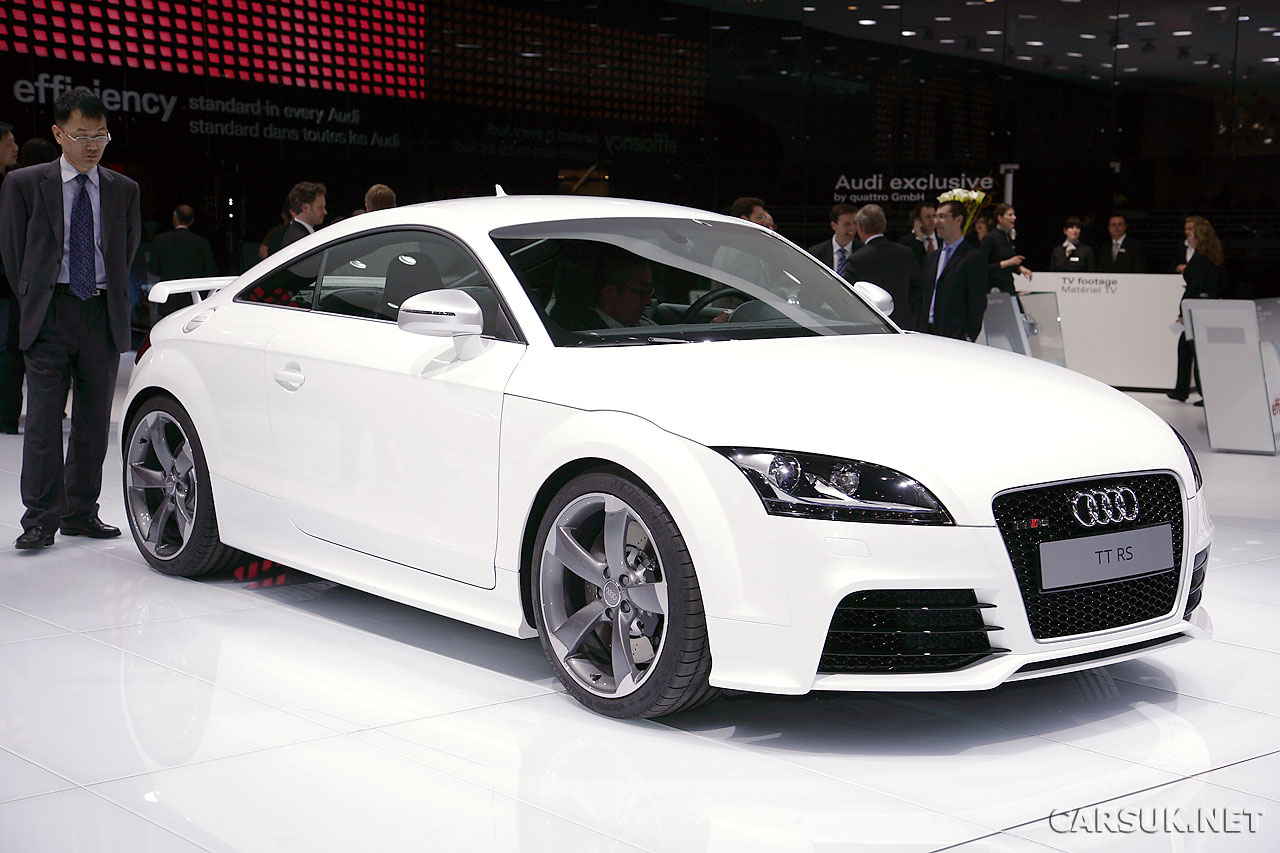
As an uncompromising sports-car engine, the 2.5-liter TFSI is ultra-compact. Just 49 centimeters (19.29 inches) in length, it is ideally suited for transverse installation in the Audi TT RS. And its weight of just 183 kilograms (403.45 pounds) also sets a record. The crankcase is made of vermicular-graphite cast iron. This high-tech material unites the utmost in strength with low weight; it has otherwise only been used for the large TDI engines from Audi. Perfectly placed reinforcements enhance the block's loadability. The lightweight cylinder head, the pistons, and the connecting rod are lightweight as well as high-strength.


The ultra-powerful five-cylinder engine is extremely fuel-efficient, requiring an average of just 9.2 liters/100 km [25.57 mpg] as regards the Coupé (Roadster: 9.5 l/100 km [24.76 mpg]). Switchable flaps in the intake manifold mix the incoming air in a calculated configuration. Injected at a pressure as high as 120 bar by the common-rail system, the gasoline swirls intensely in the combustion chamber - which in turn cools the walls. This subsequently facilitates a compression ratio of 10.0:1, which is very high for a turbocharged engine. Both of the adjustable camshafts, controlled via chains, also enhance charging efficiency with respect to the air-fuel mixture.


The large turbocharger generates up to 1.2 bar of boost pressure. The intercooler, fed air ideally by the lower segment of the single frame radiator grille, reduces the temperature of compressed air by over 80 percent at full load.


When an Audi TT RS driver pushes the standard Sport button on the center tunnel, a flap installed in the left exhaust tailpipe renders the exhaust noise even more robust and intense while boosting engine responsiveness. An optional Sport exhaust system is available with matt black tailpipe trims and sound flap.


Audi tt Rs

Audi tt Rs

Audi tt Rs

Audi tt Rs

Audi tt Rs

Audi tt Rs

Audi tt Rs

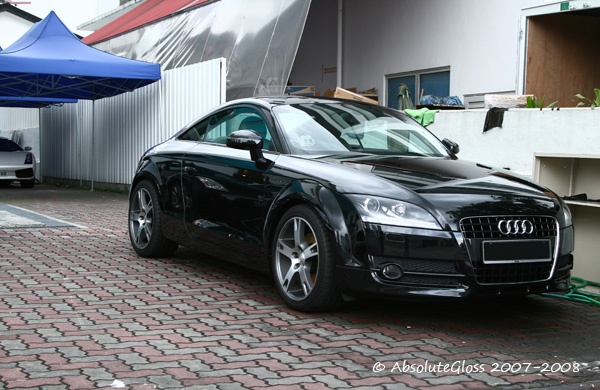
Audi tt Black

Et une accélération de 0 à en . Based on the platform A of Volkswagen , the cut , proposed in September 1998 and the roadster , available in August 1999 are initially equipped with four-cylinder engine with five valves per cylinder, 1.8 20V turbo 180 for horses a maximum speed of and acceleration from 0 to in avec une vitesse maximale de et le 0 à en . The top, which has four wheel drive (optional on the 180-hp) delivers with a maximum speed of and in à , un couple de à et pour passer de 0 à , complète la gamme au début de 2003 . A six-cylinder 3.2 L to sound serious, with an output of at a torque of at to from 0 to completes the range in early 2003 . On the aesthetic point of view, a wing back had to be installed and modified the suspension due to stability problems at high speed. Indeed, lightened the rear at high speed because of the shape of the car. The fin is thus used to add support aerodynamics . In October 2004 a mechanical transmission with double clutch DSG sequential is optional. avec un petit coup de gaz automatique pour faciliter l'enclenchement du rapport. The pass rates in 200 milliseconds which ensures linearity in both the acceleration (identical to the turbo) that downgrading to with a flick of the automatic gas to facilitate engagement of the report. .


Audi tt Black

Audi tt Black

Audi tt Black

Audi tt Black

Audi tt Black

Audi tt Black

Audi tt Black

Audi tt 2009

Coming off of a full redesign last year, the latest-generation Audi TT is now sleeker and more aggressive-looking, and in some ways defies classification. The TT has the low-slung look and feel of a sports car, but its dynamic personality is closer to that of a luxury sport coupe. And although the coupe has a pair of seats in the back, they're only suitable for kids, packages or perhaps anorexic D-listers. Still, the 2009 Audi TT has a distinctive blend of good looks, able performance and impeccable build quality.


Besides styling, last year's redesign ushered in a more sophisticated chassis as well as a more powerful turbocharged four-cylinder engine. This year, the Audi TT is mostly unchanged. Notably, all 2.0 T models with the S Tronic automatic transmission are now available with Quattro all-wheel drive. However, later in the year, Audi will introduce the TTS coupe and roadster, which will use a souped-up version of the inline-4 turbo that will supposedly be good for an impressive 272 horsepower and 258 pound-feet of torque. The 2009 TTS will also be lighter than the other TT models. With the added power and reduced weight, Audi estimates the TTS will go from zero to 60 mph somewhere between 5.2 and 5.4 seconds.


Audi tt 2009

Audi tt 2009

Audi tt 2009

Audi tt 2009

Audi tt 2009

Audi tt 2009

Audi tt 2009


Audi tt

Audi tt

Audi tt

Audi tt

Audi tt

Audi tt

Audi tt

Audi tt


2012 Toyota Sequoia

2012 Toyota Sequoia received recognition for health problems, given the four suggested five for driver protection in tests conducted by the U.S,
2012 Toyota Sequoia


2012 Toyota Sequoia

2012 Toyota Sequoia
 2012 Toyota Sequoia
2012 Toyota Sequoia
 The 2012 Toyota Sequoia is a full sized sports utility vehicle that seats eight ... The 2012 Toyota Sequoia
2012 Toyota Sequoia

2012 Toyota Sequoia

2012 Toyota Sequoia

2012 Toyota Sequoia

2012 Toyota Sequoia

2012 Toyota Sequoia

2012 Toyota Sequoia

2012 Toyota Sequoia

2012 Toyota Sequoia

2012 Toyota Sequoia
The 2011 Toyota Sequoia marks the 10th year of production for this perennial overachiever. Ever since its last redesign three years ago, the Sequoia's generous helpings of torque, interior volume and civilized road manners have kept it a top choice among full-size SUVs.

Thanks to its available 5.7-liter V8, the 2011 Sequoia is one of the quickest SUVs in its class. In our testing, a Sequoia Limited 4WD hustled its nearly 6,000-pound frame to 60 mph in 6.7 seconds. There's plenty of towing capacity, too, with up to 7,400 pounds available when properly equipped. Its 4.6-liter base V8, introduced last year and standard on the SR5, is no slouch either, with its 310 horsepower and 327 pound-feet of torque.

The Sequoia's chassis balances a comfortable highway ride with adequate off-road agility. An independent rear suspension, a relatively tight 39-foot turning circle and 10 inches of ground clearance make the Sequoia at home on trails, in the Costco parking lot and on the urban expressway. A rear air suspension is also available on the Platinum model.

Growing families will also appreciate the Sequoia's versatile second-row seats, available as either a 40/20/40-split bench or captain's chairs. These seats feature plenty of fore-aft adjustment, optimizing legroom or cargo room as needs dictate. Unlike GM's full-size SUVs, the Sequoia's independent rear suspension allows the roomy 60/40-split third-row seat to fold flat. Stowing the second- and third-row seats opens up a cavernous 121 cubic feet of cargo space for more serious hauling, facilitated by a power liftgate that is now standard on the Limited.

If you're not in need of the Sequoia's massive towing and hauling abilities, however, a large crossover SUV like the GMC Acadia (or its Buick Enclave/Chevy Traverse relatives), Ford Flex or Mazda CX-9 would be a better choice. These crossovers offer competitive passenger and cargo space with lower price tags, better handling and superior fuel economy. The 2011 Infiniti QX56 is a very appealing new entry among Herculean full-size SUVs, yet the 2011 Toyota Sequoia still is among the best in its class.
Body Styles, Trim Levels, and Options

The 2011 Toyota Sequoia is a full-size SUV capable of seating seven or eight, depending on the options selected. There are three trim levels -- SR5, Limited and Platinum -- and all are available with either two- or four-wheel drive. The base SR5 model comes standard with 18-inch alloy wheels, a roof rack, a sunroof, running boards, a 40/20/40-split second-row bench seat, triple-zone automatic climate control, heated side mirrors, a tilt-and-telescoping steering wheel with audio controls, full power accessories, a power driver seat, Bluetooth (with audio streaming) and an eight-speaker CD stereo with satellite radio, auxiliary audio and USB audio jacks.

The Limited adds 20-inch wheels, a power liftgate, leather upholstery, upgraded instrumentation, a back-up camera integrated into the rearview mirror and an upgraded 14-speaker JBL sound system with a six-CD changer.

The top-of-the-line Sequoia Platinum adds load-leveling rear air springs, adaptive shock absorbers, heated and cooled front seats, heated second-row captain's chairs (dropping capacity to seven), power-folding and -reclining rear seats, and a touchscreen navigation system.

Toyota offers two option packages for the SR5. The Sport Appearance package is a seven-passenger configuration that includes 20-inch alloy wheels, a rear spoiler, foglights and a power driver seat. The Premium package seats eight and adds leather upholstery, heated driver and front passenger seats, a power fold-and-recline third row and a back-up camera integrated into the rearview mirror. Sequoia Limited options include a rear-seat entertainment system, navigation system and second-row captain's chairs.
Powertrains and Performance

The standard engine for the 2011 Sequoia SR5 is a 4.6-liter V8 that makes 310 hp and 327 lb-ft of torque. Limited and Platinum models come with a 5.7-liter V8 (optional on the SR5) that produces 381 hp and 401 lb-ft of torque. In Edmunds testing, a Sequoia with the 5.7-liter V8 went from zero to 60 mph in a quick 6.7 seconds. Properly equipped, a 5.7-liter Sequoia can tow up to 7,400 pounds.

Both engines are paired with a six-speed automatic transmission. Four-wheel-drive models feature a two-speed transfer case with electronic shifting and push-button locking. EPA estimated fuel economy for the 4.6-liter V8 is 14 mpg city/20 mpg highway and 16 mpg combined. The 5.7-liter V8 drops slightly to 14/18/15 mpg. Four-wheel-drive models attain about 1 mpg less.
Safety

Standard safety equipment for all 2011 Toyota Sequoias includes antilock disc brakes, stability control, front-seat side airbags, front knee airbags and three-row side curtain airbags. Front and rear parking sensors are standard on the Sequoia Platinum and Limited, as is a back-up camera (optional on the SR5).

In Edmunds recent brake testing, the Toyota Sequoia required 127 feet to come to a stop from 60 mph, which is short for SUVs in this class.
Interior Design and Special Features

Aside from audio and navigation controls that are hard to reach, the Sequoia's interior is a triumph of ergonomics, with plenty of storage bins and family-friendly conveniences.

The second-row seats adjust fore and aft regardless of whether the 40/20/40-split bench or the captain's chairs are specified. In addition, the bench seat's center "20" section slides farther forward, which can be useful if a child safety seat is installed. There's also a conversation mirror so you can quell potential uprisings in the rear quarters.

The 60/40 third-row seat in Limited and Platinum models has both a power-recline and a power-fold feature. With both sets of rear seats folded down, the Sequoia's cargo space tops out at 121 cubic feet.
Driving Impressions

For a large SUV, the 2011 Toyota Sequoia's pleasant driving experience will likely win you over. The 5.7-liter V8's abundance of low-end torque makes passing maneuvers effortless, and the six-speed automatic is always on point with gear selection, even when towing. Even the 4.6-liter V8 pulls hard, particularly if you won't be maxing out your SUV's payload and towing capacities on a regular basis.

Ride comfort ranges from smooth and composed in an SR5 to downright plush in a Sequoia Platinum with the adaptive dampers. Around corners, the suspension does a fine job of managing 3 tons of SUV, though the numb steering adds to the overall sense of heft.
2012 Toyota Sequoia
2011 Volvo C30

2011 Volvo C30 highlights from Consumer Guide Automotive. Learn about the 2011 Volvo C30 and see 2011 Volvo C30 pictures.


2011 Volvo C30

2011 Volvo C30

2011 Volvo C30

2011 Volvo C30

2011 Volvo C30

2011 Volvo C30

2011 Volvo C30

2011 Volvo C30

2011 Volvo C30

2011 Volvo C30

2011 Volvo C30

2011 Volvo C30

2011 Volvo C30

2011 Volvo C30

2011 Volvo C30
 Live from the 2010 Detroit Auto Show, Volvo Designer, Peter Horbury, give us an up close look at what went into the facelifted 2011 Volvo C30
2011 Volvo C30
 2011 Volvo C30
2011 Volvo C30

2011 Volvo C30
The 2011 Volvo C30 is treated to a refreshed exterior, including an all-new front end.
Introduction

The 2011 Volvo C30 isn't your typical "hot hatch." Sure, it's got a powerful turbocharged engine and an available sport-tuned suspension, but this Swede is about a lot more than just speed. Don't get us wrong -- the C30 actually drives nicely and has more dynamic capabilities than most drivers will care to exploit. But with its chic interior and a classic hatchback design that evokes Volvos of yore, the C30 is also the closest thing in this segment to automotive art.

A product of the Ford era at Volvo, the C30 (like the related S40 sport sedan) shares its basic platform design with the Mazda 3 and the latest Ford Focus. That's a good thing, as we've applauded these underpinnings in virtually every application. Power comes from Volvo's familiar turbocharged five-cylinder engine, which cranks out a healthy 227 horsepower and 236 pound-feet of torque. The C30 ultimately gives up a bit of sportiness to the competition, but it compensates with superior sophistication and refinement.

And then there's its unique aesthetic appeal, which is particularly evident in the distinctive sloping rear end's oversized window and trademark vertical taillights. Inside you'll find the "floating" center stack familiar from the S40 and other Volvos. Debuting for 2011 is a new front fascia inspired by the XC60 crossover. We like the idea -- the C30 previously shared the S40's rather plain front end -- but we're not sure about the execution, as the C30 now appears a bit nose-heavy. Still, there's no disputing that Volvo's little hatch has maintained its distinctive looks.

Compared to hot hatches like the Mini Cooper S or Subaru WRX, the 2011 Volvo C30 is a different kettle of Swedish fish. It certainly goes fast and handles well, but Volvo has refused to sacrifice comfort for performance, even in sport-tuned R-Design trim. The result is something refreshing in this segment: a capable hatchback that remains perfectly pleasant to drive on a daily basis. Other than the Volkswagen GTI, no rival can match the C30's refinement -- and aesthetically speaking, the C30 is in a class of one.
Body Styles, Trim Levels, and Options

The 2011 Volvo C30 is a four-seat, two-door hatchback offered in two trim levels. The base T5 includes 17-inch alloy wheels, height-adjustable seats, a trip computer, cruise control, a 50/50-split-folding rear seat, full power accessories, a tilt-and-telescoping steering wheel with audio controls, Bluetooth and an eight-speaker CD audio system with an auxiliary audio jack. The T5 R-Design trim level adds 18-inch wheels, foglights, a sport-tuned suspension, a quicker steering ratio, sporty exterior trim, partial leather upholstery, blue-face gauges and metallic interior trim.

The Preferred package tacks on power front seats, bi-xenon headlamps and keyless entry/ignition, as well as foglights and aluminum interior trim on the T5. The Multimedia package adds a 10-speaker Dynaudio surround-sound audio system and satellite radio. The Climate package includes heated front seats, headlamp washers, automatic climate control and rain-sensing wipers. Stand-alone options include leather upholstery, a sunroof, a blind-spot information system and a navigation system with real-time traffic.
Powertrains and Performance

The front-wheel-drive 2011 Volvo C30 is powered by a turbocharged 2.5-liter inline-5 that produces 227 hp and 236 lb-ft of torque. A six-speed manual transmission is standard, and a five-speed automatic is optional.

In performance testing, we hustled a manual-equipped C30 to 60 mph in a fleet 6.4 seconds. Fuel economy checks in at 21 mpg city/29 mpg highway and 24 mpg combined for the manual; the automatic has a 21/30/24 mpg rating.
Safety

The 2011 Volvo C30 comes standard with antilock disc brakes with brake assist, stability control, front-seat side airbags, full-length side curtain airbags and front seats with whiplash protection. Volvo's Blind Spot Information System (BLIS) is optional.
Interior Design and Special Features

The C30's front compartment comes straight out of the S40 sedan, which means it has Volvo's trademark floating center stack -- a cool flat-panel bridge of buttons and displays between the dash and the center console, with extra storage space beneath. Most controls are straightforward and attractive, but the confounding optional navigation system has a steep learning curve. The front seats are exceptionally comfortable (though more side bolstering would be helpful on a curvy road), and the telescoping steering wheel accommodates drivers of all sizes.

Rather than attempt to shoehorn a fifth passenger into the C30, Volvo went with two rear bucket seats. It's actually quite comfortable back there for average-sized adults, though legroom can be cramped. Rearward visibility is excellent thanks to the tall and wide all-glass hatch. The cargo area can accommodate 13 cubic feet with the 50/50-split rear seatbacks up and 20 cubes when both are lowered -- hardly impressive by hatchback standards.
Driving Impressions

The 2011 Volvo C30 has ample grip and accurate steering, particularly the R-Design model with its extra rubber and a quicker steering ratio. It's a fun car to drive. The Mini Cooper S may be more entertaining on tight roads, but the C30 has a smoother ride and a quieter cabin. The turbocharged five-cylinder delivers a confident rush of power from low rpm, and its distinctive soundtrack adds a little extra spice.
2011 Volvo C30